You’re not imagining it. For women who are 38, 42, 46 and wondering what is going on.
Something has changed. Let’s work out what.
You are not imagining it, and you are not too young. Start with what you are actually noticing, not with a word you are not sure applies to you.

The reason nobody told you
Most women experiencing this do not know that is what it is.
In a study of 7,650 women, 56% with symptoms did not believe they were in perimenopause.
The changes get filed under stress. Or a bad year. Or simply getting older.
So the first useful step is not treatment. It is working out whether the things you have been explaining away separately are actually one thing.
Could this be perimenopause?
Nine questions. Four minutes. Start with what you are noticing.
- A score across six areas, not a yes or no
- What else could be causing it
- What to do next, and what to ask for
Start where you actually are
What are you noticing?
Most health sites make you know the medical word first. Start with the thing you would actually say out loud.
Plainly Her Answers
The questions, answered in the first forty words
No preamble, no thousand-word run-up. The answer, then what else could cause it, then what to do next, then who reviewed it and when.
Ask Plainly Her
Tell us what you’ve been noticing.
Plain words, not medical ones. It answers only from our own reviewed pages, names the page every time, and tells you when we have not covered something rather than inventing an answer.
Nothing you type is stored, logged or attached to your email address. Urgent questions get a safety response and no sales link, and that check runs before anything is sent anywhere.
Named clinicians, and a date
Every clinical page names the person who checked it and the day they checked it. If we get something wrong, we correct it in public.
We tell you when it does not work
Every recommendation carries its evidence grade, from strong to "we would not buy this". Two things in Plainly Her Picks carry no purchase link at all.
You can see how we get paid
Commission on some products, disclosed at the link. Nothing on symptom pages. No margin on medication, ever.
If it turns out there is a name for it
Perimenopause is the years before your periods stop, and it can start in your late thirties.
It lasts four to eight years. Almost everything people call "menopause symptoms" actually happens during it.
If the word feels like it belongs to someone older than you, that is exactly why so many women reach their late forties before anyone connects the dots.
Plainly Her Experts
When you want to talk to someone
Not everyone needs a doctor. Some of this is medical, some is nutritional, some is a training problem, and some is a mental health problem that has been misfiled as a hormonal one for two years. Every practitioner shows their profession, where they are registered, and whether they can diagnose or prescribe.
Doctors and menopause clinicians
Medical assessment, hormone therapy, non-hormonal prescription options, investigation of bleeding and other symptoms that need a clinical opinion.
Mental healthPsychologists and therapists
New anxiety, low mood, rage that arrives out of proportion, sleep that has become a mental health problem rather than a hormonal one, and the overlap between all four.
NutritionRegistered dietitians and nutrition professionals
Protein targets, weight and metabolic change, bone-supporting intake, eating with a Caribbean or diaspora food culture rather than against it.
FitnessStrength and exercise professionals
Progressive resistance training, programming for someone who has never lifted, working around joint pain, building a home or gym routine you will actually keep.
Pelvic healthPelvic health physiotherapists
Leaking, urgency, prolapse symptoms, pain with sex, and the pelvic floor changes that get dismissed as an inevitable part of having had children.
Complementary careComplementary health practitioners
Acupuncture, yoga therapy, mindfulness-based approaches and other practices women ask about constantly and are usually either sold or sneered at.
Plainly Her Guides
The longer reads
Eating for Muscle and Bone
Protein targets that mean something, what they look like on a plate in an American kitchen and a Caribbean one, and the two minerals that actually matter for bone.
Treatment · 12 minutesHRT, Explained Plainly
What hormone therapy is, what the 2025 labelling change actually did, how route and timing change the picture, and the questions worth asking at the appointment.
Sleep · 9 minutesSleep During Perimenopause
Why the second half of the night breaks first, what else could be causing it, what has real evidence, what is only comfort, and how to raise it so it is taken seriously.
Plainly Her Picks
We explain first. Then we recommend.
Most of what is sold for menopause has weak evidence behind it, so this is a short list rather than a catalogue. Every item carries its grade and its catch, and the things we would not buy carry no link at all.
Protein powder, whey isolate or plant
Hitting a protein target is the single highest-leverage nutrition change in midlife: it is what preserves muscle while oestrogen falls, and muscle is what protects metabolic rate, bone loading and independence later.
The catch. Powder is convenience, not magic. The same grams from fish, eggs, chicken, Greek yoghurt or peas count exactly the same.
Adjustable dumbbells, 5 to 25kg
Progressive resistance training is the best-evidenced intervention for muscle, bone and joint pain in this decade of life. Adjustable pairs save space and, more importantly, let you add load, which is the part that makes it work.
The catch. Cheap adjustable sets rattle and get abandoned. This is one of the few places where paying more genuinely changes whether the thing gets used.
Cooling mattress topper
No trial evidence for night sweats specifically. Consistently reported as helpful, carries no risk, and it targets the thing that actually wakes you, which is the temperature spike rather than the sweat.
The catch. It manages the symptom. It does nothing about the cause, and if night sweats are severe there are treatments that are far more effective.
"Hormone balancing" detox teas
Nothing in these blends balances a hormone. Most work by being a laxative, which produces a scale change that women are then told is progress.
The catch. We link to nothing here, and this category is a large part of why this site grades things at all.
Where the research is loudest and the coverage is thinnest
For Black and Caribbean women
The SWAN cohort found Black women experience hot flushes roughly 50% more often, and for around ten years rather than six and a half.
They are also about half as likely to be prescribed hormone therapy. Almost nobody writes for that.

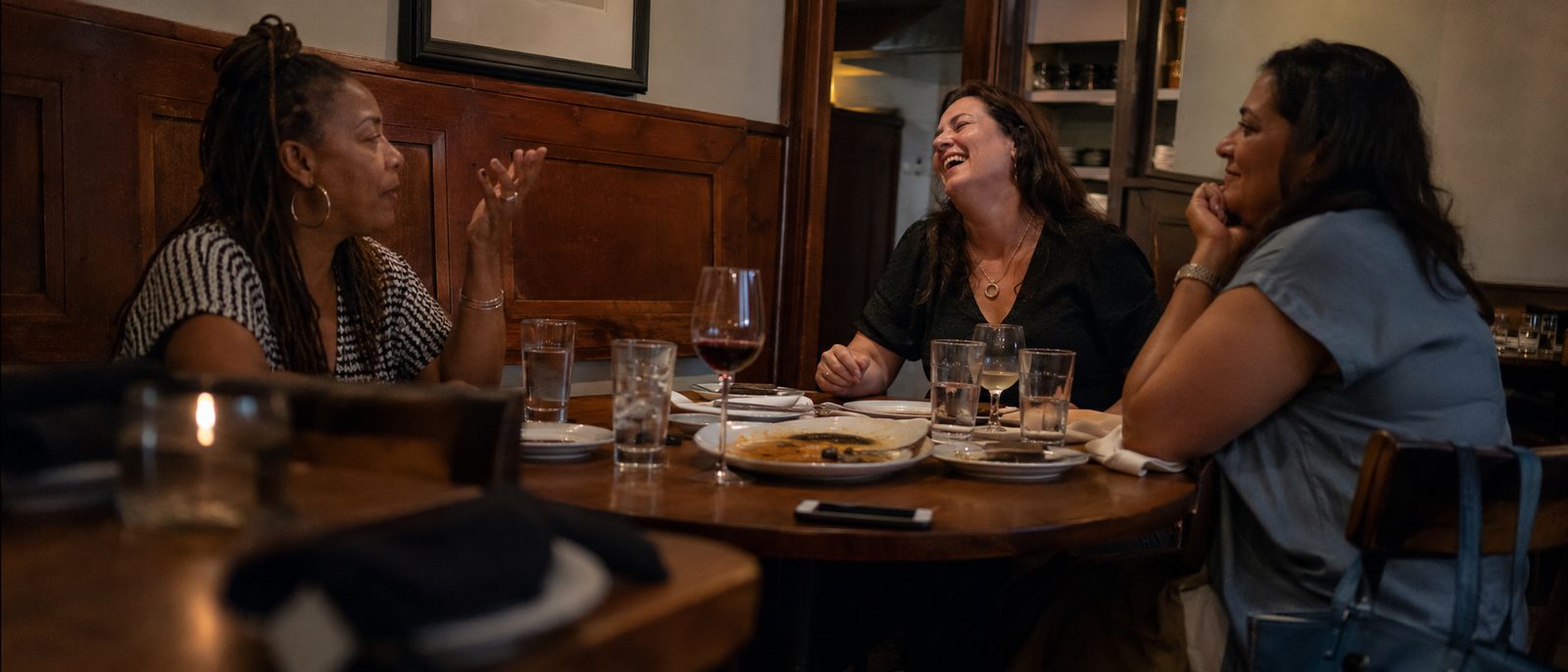
You are not the only one
Nobody warned any of us.
Most women find out what this is from another woman, years later than they should have.
Signs & Sense, our weekly note
One email a week: what changed in the evidence, what women are asking, and what is actually worth your attention. Written by us, reviewed like everything else.
One email to deliver it, then a weekly note you can leave whenever you like. We never sell your address, and we never attach it to anything you type into the check or the assistant.